
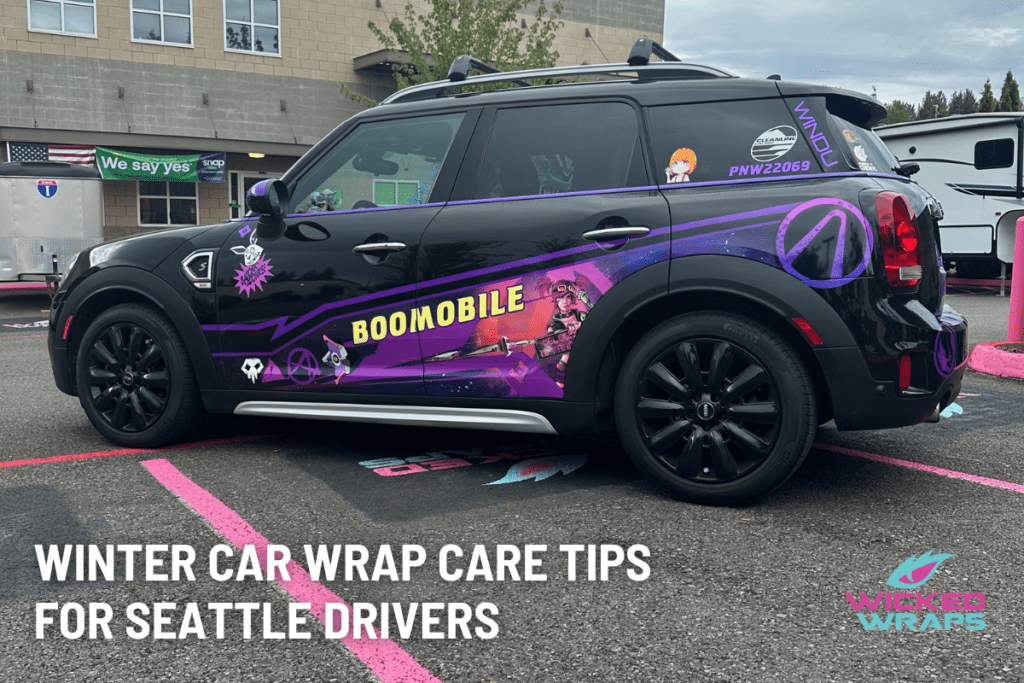
Why Winter Wrap Care Matters in the Pacific Northwest
Seattle winters don’t usually bring heavy snow or extreme cold—but they do bring constant rain, moisture, road grime, and temperature swings, all of which can quietly impact the long-term performance of a vinyl wrap.
While major vinyl manufacturers consider the Pacific Northwest a lower-risk climate compared to extreme heat regions like Arizona or Texas, winter conditions still require proper care. Moisture can collect along edges and seams, road grime builds up faster, and colder temperatures slightly reduce vinyl flexibility.
Common winter concerns we hear from wrap owners include:
- Peeling or lifting edges
- Dull or faded appearance
- Staining from road spray and grime
- Worry about premature wrap failure
At Wicked Wraps, we’ve been designing, printing, and installing vehicle wraps since 2005. Our experience with personal vehicles, commercial fleets, and specialty projects has shown that wraps can thrive year-round in Seattle—with the right care and professional oversight.
Key Winter Wrap Care Takeaways (Seattle)
- Seattle winter risks include moisture buildup, road grime, and colder temperatures
- Hand washing with pH-neutral soap is safest during winter
- Pressure washing too close to edges is a common cause of wrap issues
- Road salt and debris accelerate wear on bumpers and lower panels
- Garage or covered parking helps maintain vinyl flexibility
Professional inspections catch small issues early and extend wrap life
How Does Seattle Winter Weather Affect Vinyl Wraps?
Moisture, Temperature Fluctuations, and Road Contaminants
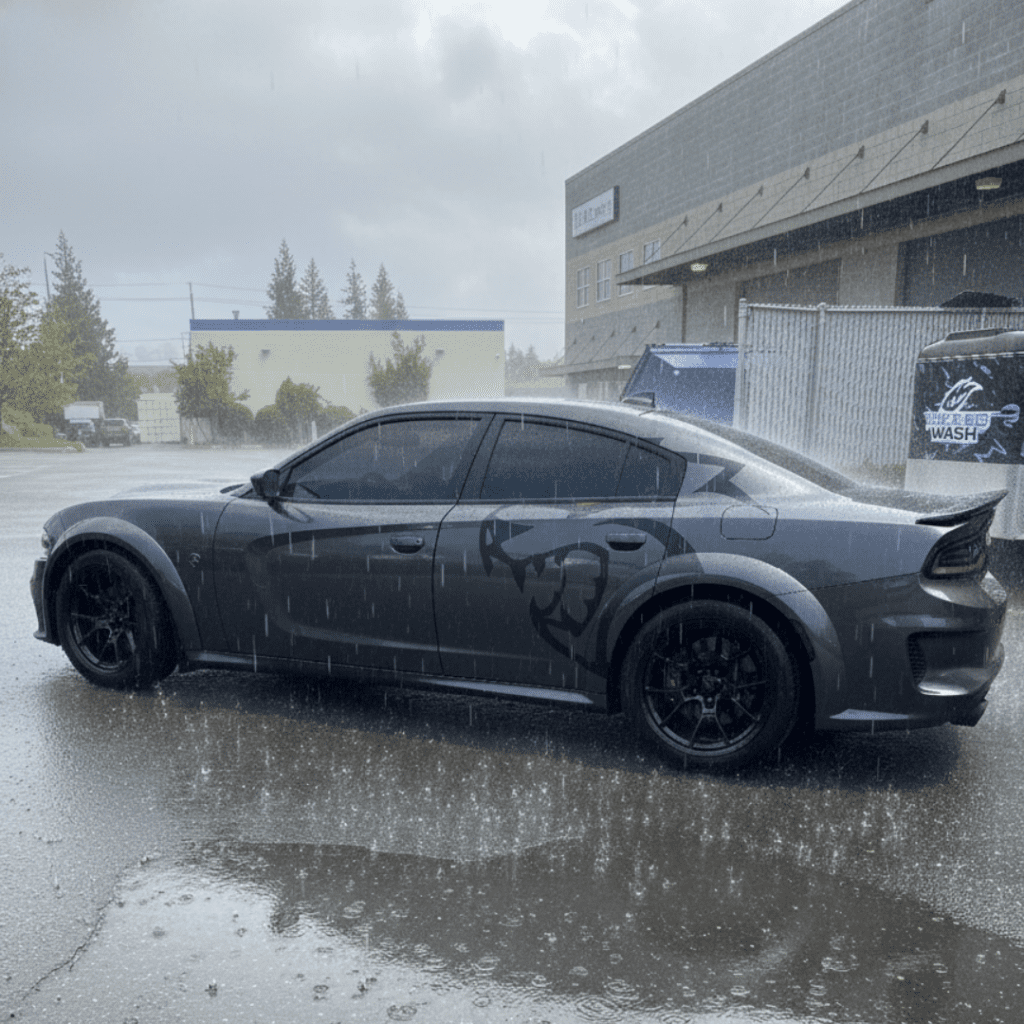
Seattle’s winter challenge isn’t intensity—it’s consistency. Continuous rain and wet roads mean moisture can settle into wrap seams and recessed areas if vehicles aren’t cleaned regularly.
Colder temperatures also make vinyl slightly less flexible. This doesn’t mean wraps fail in winter, but it does mean:
- Proper surface prep
- Climate-controlled installation
- And post-install inspections
are critical.
At Wicked Wraps, all installations are completed indoors in a climate-controlled facility, following manufacturer-recommended best practices. This is especially important for daily drivers, fleet vehicles, and commercial wraps that stay on the road year-round.
How Should You Wash a Wrapped Vehicle in Winter?
Proper Winter Washing Techniques for Vinyl Wraps
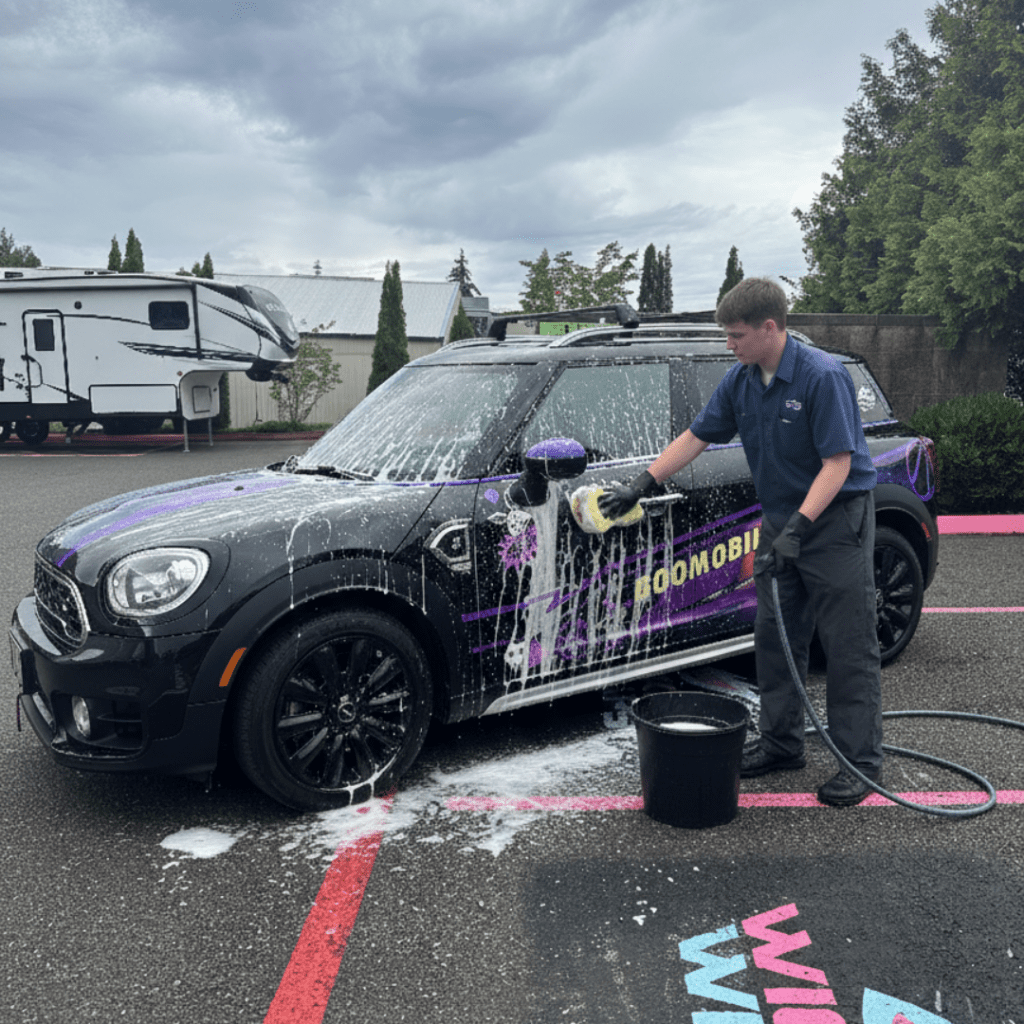
Professional installers and wrap manufacturers recommend hand washing during winter months.
Best practices include:
- Hand washing instead of automated car washes
- Using pH-neutral soaps
- Rinsing with low pressure
- Using lukewarm water, not hot water
Automated car washes and aggressive pressure washing increase the risk of forcing water into wrap edges—especially in colder weather when vinyl is less forgiving.
Low-pressure rinsing using a hose, electric pressure washer, or self-serve wash is safe when done correctly and kept away from edges.
Wicked Wraps also offers wrap-safe soaps and cleaning supplies for customers who want confidence in their winter maintenance routine.
Learn more about professional installation and care:
Vehicle Wrap Services
For industry-wide guidance, SEMA also provides general vinyl wrap maintenance recommendations aligned with these practices.
Why Road Salt, Grime, and Debris Matter in Winter
Protecting Your Wrap From Winter Wear
Even during mild winters, road salt, sand, and debris can accelerate vinyl wear—especially in high-impact zones like:
- Front bumpers
- Rocker panels
- Lower doors
- Rear quarter panels
These areas see the most road spray and abrasion during winter driving.
For additional protection, Wicked Wraps may recommend:
- Ceramic coatings applied over wraps
- Paint Protection Film (PPF) on high-impact areas over vinyl
These options help reduce abrasion, make cleaning easier, and add an extra layer of defense without replacing the wrap itself.
Our team has extensive experience combining wraps with protective films and coatings to extend appearance and lifespan.
Should Wrapped Vehicles Be Garaged in Winter?
Cold Weather Parking and Storage Best Practices
Garage or covered parking is recommended whenever possible during winter. While Seattle doesn’t experience extreme cold, prolonged exposure to cold and moisture can reduce vinyl flexibility over time.
Best practices include:
- Garage or covered parking
- Avoiding non-breathable car covers
- Limiting long-term moisture exposure
For fleet vehicles that must park outdoors overnight, routine inspections and consistent cleaning become even more important. Wicked Wraps works with fleet operators to provide wrap-friendly storage and maintenance guidance.
What Should You Avoid Doing to a Wrap in Winter?
Common Winter Wrap Mistakes
Many winter wrap issues come from avoidable mistakes, including:
- Using ice scrapers on wrapped surfaces
- Applying harsh chemicals or de-icers
- Pressure washing too close to edges
Edge lifting is usually caused by improper installation, trimming too short, or aggressive washing, not the climate itself.
Wicked Wraps minimizes these risks through:
- Climate-controlled installs
- Manufacturer-recommended techniques
- Required post-install inspections at 2 weeks, 30 days, and 90 days
Learn more about our standards and experience:
About Wicked Wraps
When Should You Schedule a Winter Wrap Inspection?
Early Detection Protects Your Investment
Professional inspections help identify minor issues before winter conditions worsen them.
Early warning signs include:
- Lifting or relaxed edges
- Bubbling or trapped moisture
- Discoloration or dull areas
Routine inspections help extend wrap lifespan and protect resale value. Wicked Wraps positions itself as a proactive partner for both personal vehicles and fleets.
Why Seattle Drivers Trust Wicked Wraps Year-Round
Local Expertise, Certified Installers, Proven Results
Wicked Wraps has served Washington drivers since 2005 and holds certifications from:
- Avery Dennison
- Fellers
- STEK
We use American-made materials, maintain in-house printing, and install wraps in a climate-controlled environment. Our experience spans personal vehicles, commercial fleets, and specialty projects—all maintained through Seattle winters.
Rather than hard selling, our focus is education, prevention, and long-term results.
Conclusion: Do Vinyl Wraps Last Through Seattle Winters?
Yes—with proper care.
Seattle’s winter climate doesn’t have to shorten the life of your wrap. Regular cleaning, safe washing habits, smart storage, and professional inspections allow vinyl wraps to perform well year-round in the Pacific Northwest.